
How Modular Trade Show Displays Cut Costs for Multi-Show Exhibit Programs
If your brand hits five, ten, or fifteen shows a year, your exhibit budget is probably bleeding in places you can’t see on a single invoice. Storage fees. Reshipping charges. A damaged panel here, a warped laminate there. By the third or fourth show of the season, those small costs add up to a number that makes finance ask hard questions.
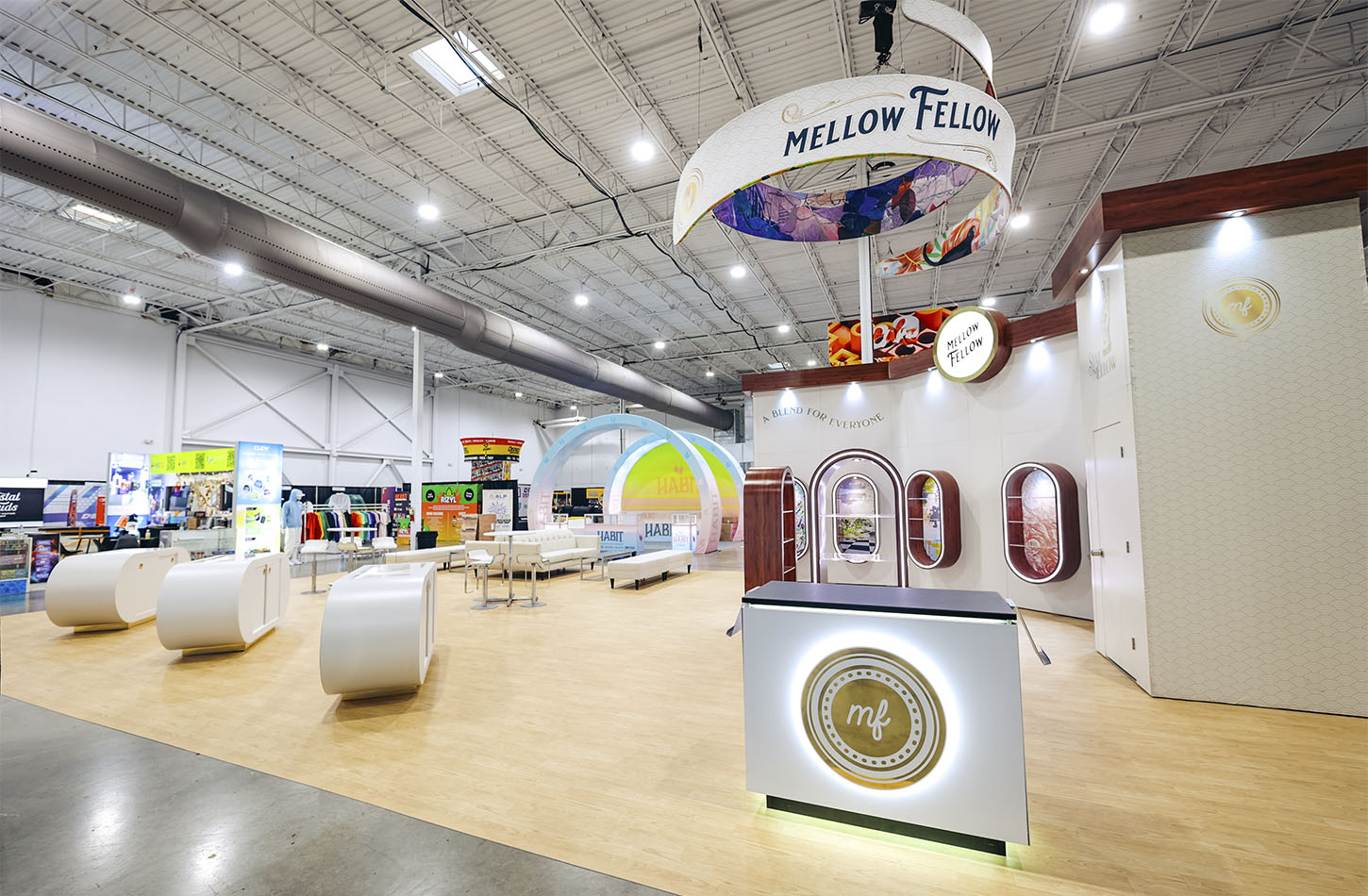
Table of Contents
This is undoubtedly why more exhibit managers are moving toward modular trade show displays
At Exhibit Craft, we’ve built multi-show exhibit programs for brands across aviation, consumer goods, marine, and manufacturing, and the pattern is consistent: the companies with the lowest cost-per-show are almost always running a modular system, not a fleet of one-off custom builds.
Here’s how modular trade show displays actually lower the cost of running a full show season, and why it matters more than most exhibitors realize until they’ve lived through a bad one.
What Are Modular Trade Show Displays?
Modular trade show displays are exhibit systems built from a kit of reusable components, panels, frames, towers, counters, and lighting elements that can be reconfigured into different booth sizes and layouts without building an entirely new structure each time. A single modular kit might flex from a 10×20 inline space at a regional show to a 20×20 island at a flagship event, using many of the same pieces.
Unlike a fully custom exhibit built for one specific footprint, a modular display is designed from day one to travel, adapt, and get reused. That single design decision is where most of the cost savings come from.
The Real Cost of a Multi-Show Exhibit Program
Exhibitors tend to budget for the visible costs: design, fabrication, and shipping to the first show. What gets missed is everything that happens between shows.
Here’s where the money quietly leaks out of a traditional, non-modular exhibit program:
- Warehouse storage for a large custom booth between events, often billed monthly
- Drayage charges at every single show, calculated by weight and crate count
- Reshipping fees when a booth has to move from show to show on a tight turnaround
- Damage and replacement costs from repeated handling, transport, and setup cycles
- Redesign fees when a booth built for one footprint doesn’t fit the next show’s space
- Extra labor hours for installation and dismantling on complex, non-standardized builds
None of these show up as a single line item labeled “waste.” They show up as a dozen smaller charges spread across a full year of shows, which is undoubtedly why they’re so easy to underestimate during budget season.
How Modular Trade Show Displays Cut Costs Across a Show Season
Reconfigurable Kits Replace Multiple Booths
Instead of building a separate exhibit for every show size on your calendar, a modular system gives you one core kit that reconfigures into several footprints. A 20×20 modular booth can often shrink into a 10×20 for a smaller regional event or expand into a larger island layout for a flagship show, using the same graphics, frames, and structural components.
That means one build instead of three or four. One set of crates instead of a warehouse full of show-specific structures. For a brand running a full multi-show exhibit program, that alone can eliminate tens of thousands of dollars in redundant fabrication.
Smaller Footprint, Smaller Storage Bill
Modular components are engineered to break down into compact, stackable cases. A custom island exhibit might require a small fleet of oversized crates sitting in a warehouse between shows, racking up monthly storage fees whether it’s being used or not. A modular kit typically packs into a fraction of that volume, which translates directly into lower storage costs.
Lighter Freight Means Lower Drayage
Drayage is billed by weight and crate count, and it’s one of the most brutal line items in any trade show budget. Modular trade show display systems are built from lightweight, engineered materials designed for repeated transport, not one-time installation. Less weight and fewer crates mean lower drayage at every single stop on the show calendar, not just the first one.
Fewer Replacement Builds
Because modular systems are designed for reuse from the start, the materials and connection hardware are built to survive repeated setup, teardown, and shipping cycles. That durability reduces the need for mid-season repairs or full rebuilds, which is one of the quietest but most expensive line items in a poorly planned exhibit program.
Ready to see what a reconfigurable exhibit system could save your team this season?
Talk to Exhibit Craft about a multi-show exhibit program built around modular trade show displays.
Real Results: Mellow Fellow’s Multi-Show Exhibit Program
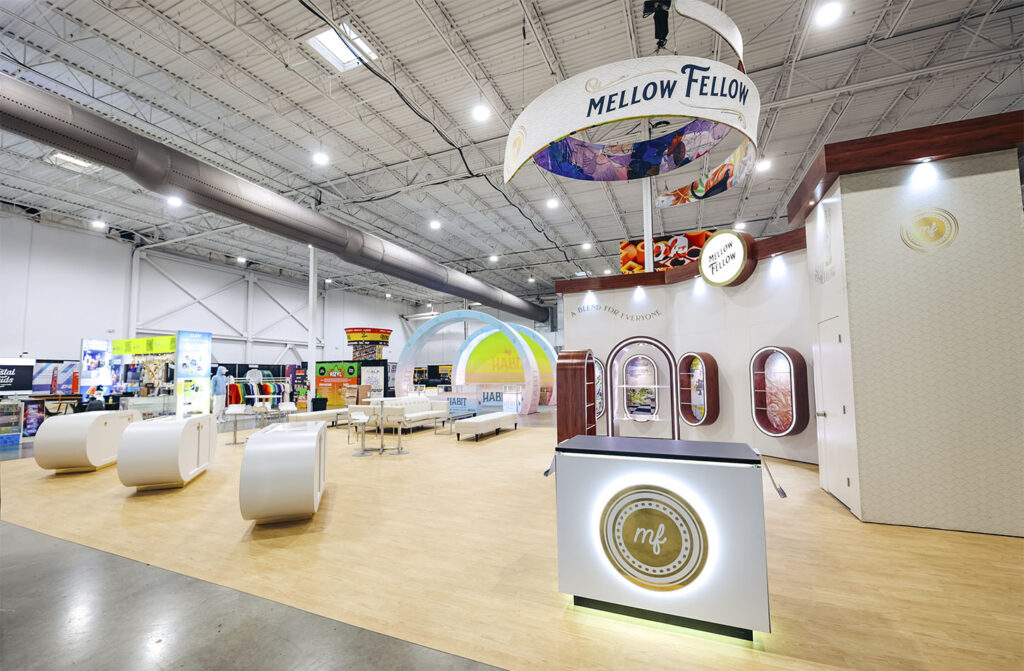
Mellow Fellow needed a creative partner who could scale with a busy, growing event calendar. Exhibit Craft delivered two coordinated booth formats: a flagship 30×50 island exhibit for major shows like APE Miami and CHAMPS Las Vegas, paired with a modular 20×20 version used across several secondary CHAMPS activations.
That two-tier modular approach let Mellow Fellow show up consistently at every event on the calendar without commissioning a brand-new build for each one. As the brand’s marketing team put it, the booth travels easily and is already on its way to the next city almost as soon as one show wraps. That kind of turnaround is only possible when the exhibit system is built for reuse, not rebuilt from scratch every time.
Real Results: GA Telesis and the Sustainability Payoff
GA Telesis earned Better Stands Gold recognition at MRO Americas, an award that specifically celebrates exhibitors moving toward reusable exhibit construction instead of disposable, single-use booths. That recognition reflects a broader shift happening across the trade show industry: sustainability and cost control are now pointing in the same direction.
A reusable, modular exhibit isn’t just a smart budget decision. It’s also becoming a competitive differentiator, particularly in industries like aviation where sustainability credentials increasingly factor into how a brand is perceived on the show floor.
Is a Modular Trade Show Display Right for Your Show Season?
Modular systems aren’t the answer for every exhibitor, but they’re worth serious consideration if any of the following sound familiar:
- You exhibit at three or more shows per year with varying booth sizes
- Your current exhibit sits in storage more months than it’s actually on a show floor
- Drayage and reshipping fees are eating into your marketing budget faster than expected
- Your team is tired of rebuilding graphics or structures for every new footprint
- Sustainability and reusability are becoming part of your brand’s public commitments
If two or more of these apply, a modular trade show display system is likely to pay for itself within a single show season, not years down the road.
Getting Started with Exhibit Craft
A well-designed modular exhibit does more than save money. It keeps your brand consistent from show to show, cuts down on the logistics headaches that come with a packed event calendar, and gives your team one system they can rely on instead of a patchwork of one-off builds.
Exhibit Craft has designed and managed modular, multi-show exhibit programs for brands across aviation, consumer goods, and manufacturing, including the flexible systems behind Mellow Fellow’s award-winning booth program. If your show calendar is growing and your exhibit budget isn’t keeping up, it’s worth a conversation.